Sixty Dollars for the Thing Keeping Her Up at Night
Trembling Hands
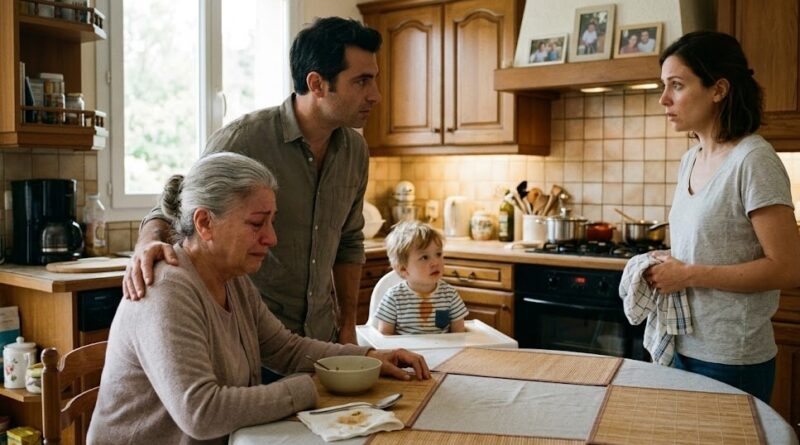
The spoon caught the rim of the bowl on the way up, a flat tap of metal on ceramic, and oatmeal slid off the edge back into the bowl. The old woman set the spoon down and tried again. Same thing. Her daughter-in-law had been at the counter for ten minutes pretending to wipe a spot that was already clean, and the second tap was what made her turn around.
“I think we should talk about the burner.”
She kept her eyes on the bowl. The oatmeal had gone the color of wet cardboard and she wasn’t going to eat it now anyway. Her hands had been like this for about a year. Some days fine. Some days the fork would shake on the way to her mouth and she’d have to brace her wrist against the table. This was one of the other kind of days. She was seventy-four and tired in a way that sleep didn’t touch.
“What about it.”
“Tuesday. You left the front-left burner on. I came down and the pan was sitting on it dry.” Her daughter-in-law had a dish towel in her hands and was wringing it like a rag, around and around. “I’m not — I just need us to talk about it. The baby’s right there.”
The boy was right there. Three years old, strapped into the high chair, a smear of jam on his cheek, watching the two women with the open dumb attention of a kid who knows something’s wrong and can’t read it. Her son stood by her chair with one hand on her shoulder. He’d been standing there since the conversation started and hadn’t said anything, which was the whole problem with him, going back a long time.
“He’s right there,” she repeated. “So the issue is me.”
“The issue is the stove.”
“You said his name. Not the stove’s.” She finally looked up. Her eyes were wet and she hated that, hated that the shaking had a twin in the crying, both things her body did now without asking her. “Go ahead and say it. You think I’m dangerous to have around him.”
The younger woman opened her mouth and didn’t get anything out.
Eighteen Months
She’d come out eighteen months ago. The boy was an infant then and her son and his wife had both gone back to work because they had to, the mortgage didn’t care about a newborn, and full-time daycare cost more than one of their paychecks brought in. She’d been alone in her apartment two thousand miles away, widowed eleven years, and when her son called sounding like a man underwater she’d said she’d come. Not for a visit. To stay.
It had been good. Better than her daughter-in-law expected. The younger woman had braced for the in-law in the kitchen, the comments, the territory war, and instead got a woman who did the school-adjacent things and the naps and started dinner at four so it was ready when they dragged in at six. They’d gotten close, the two of them, in the slow way you do when you’re both tired and somebody else is finally helping. The younger woman had told her sister once that her mother-in-law was the only reason the family stayed above water.
But seventy-three turned into seventy-four and the body did what bodies do. The tremor showed up first, small, easy to explain away. Then the stairs took longer. Then one afternoon she got dizzy halfway down and had to sit on a step for a while before her legs felt like hers again, and she never mentioned it to anyone, which was its own kind of warning. And then Tuesday. The dry pan. The smell of hot metal in the kitchen that her daughter-in-law walked into with the baby on her hip.
The younger woman hadn’t slept right since. The fear had been sitting in her chest for three days looking for a door, and this morning, with the spoon tapping the bowl, it found one and came out wrong.
The Spoon
Nobody moved for a while. The coffee maker ticked. Outside a car door shut and an engine turned over and faded down the street.
Then the boy picked up his own spoon and banged it on the tray. Twice. Tap, tap — the same two beats his grandmother’s hand had made against the bowl.
He wasn’t doing anything. He was three and he liked the noise. But it landed in that silence like a dropped glass, and the old woman looked at him, at his fat little fist that couldn’t work a spoon yet either, too new at it where she was too far past it, and something in her chest gave way and she laughed. Not a nice laugh. A wet, cracked, half-sob of a laugh.
“He bangs his spoon and it’s the cutest thing in the world,” she said. “I bang mine and you want me gone.”
Her daughter-in-law flinched. “That’s not what I said.”
“It’s what I heard.”
“I know.” The younger woman stopped wringing the towel. She looked at it like she didn’t know how it got in her hands, and set it on the counter. Then she pulled out the chair across from her and sat down, which she hadn’t done the whole time. Sitting changed something. “It’s not what I want. I don’t want you gone, do you — God. You think I want that?”
“I don’t know what you want. You came down here with a face.”
“I want you to not get hurt.” Her voice did something then, climbed and broke. “That’s the whole thing. I keep seeing the pan. I keep thinking twenty more minutes. And it’s not because you’re a burden, it’s because I can’t do any of this without you and I had this — picture, Tuesday, of you on the floor in here, and I haven’t been able to get it out of my head.”
What Her Son Wasn’t Doing
He’d been holding his mother’s shoulder this whole time like it was a railing.
He knew what she’d given up for him. He’d been raised by her alone and he’d watched her go without — coats, dentist visits, whole categories of things — so he could have. Standing here listening to his wife lay out the case for his mother being a hazard, some animal part of him wanted to step in front of her and tell his wife to back off.
Except his wife wasn’t wrong. The burner had been on. He’d seen the pan himself. And he’d watched his mother take the stairs lately the way you watch someone carry something too full, waiting for the spill. If they ignored all of it and something happened to the boy, or to her, that was the end of all of them.
So he’d done what he did, which was nothing. A hand on the shoulder and his mouth shut. He’d been standing in the gap between these two women for a year telling himself it was loyalty when it was just cowardice with better manners.
He pulled out the third chair and sat down.
The Table
“Okay,” he said. The word came out rough and he cleared his throat. “Nobody’s going anywhere. Ma, you’re not going anywhere, and we’re not saying that word in this house again.” He put both hands flat on the table. “But the burner was on. I’m not going to sit here and act like it wasn’t. And the stairs are bad, I’ve seen it, you grab the rail with both hands now.”
His mother started to say something and he kept going, gently, but he kept going, which was new.
“So it’s not are you staying. You’re staying. It’s how do we set it up so she can sleep and you don’t feel like we’re managing you. Those aren’t the same fight. We’ve been treating them like the same fight.”
What they figured out wasn’t much. That was almost the surprise of it — how unspectacular the actual fixes were after a morning that had felt like the end of something.
They got her to a doctor about the shaking, and it turned out to be mostly manageable, part medication and part the plain fact that she’d been running herself down for a year and a half and nobody, including her, had noticed. They bought a stove with an auto shutoff, the kind that kills the burner after a set stretch of time. Sixty dollars at the appliance place for the thing that had been keeping her daughter-in-law up at night. They moved her bed and dresser into the downstairs room that had been an office, so the stairs stopped being a daily test she could fail. They brought somebody in a few hours a week — not to mind the old woman, that wording got banned too, but to take a load off her, so being the thing that held the house up didn’t have to mean grinding herself down to the dropped spoons and the dizziness on the steps.
None of it was the big dramatic thing the kitchen had seemed to call for. It was a sixty-dollar stove and a bed in the wrong room and a stranger coming Tuesdays and Thursdays. People who didn’t want to lose each other working out the logistics of not losing each other.
After
The shaking didn’t go away. That’s not how it goes. But it stopped being a thing hanging over the house and went back to being a thing, one of the ordinary facts the family carried.
She kept her place. Still made the dinners, on the stove that would shut itself off if she forgot, which she sometimes did, and it did. Still did the naps and the late-afternoon stretch with the boy, with a rail bolted to the downstairs hall now. Some mornings her hands were bad and the spoon tapped the bowl, and the boy banged his right back, tap tap, and at some point that had quietly turned into a thing between the two women instead of the sound of an accusation. The younger one called it the spoon section. Her mother-in-law pretended to find this annoying.
Weeks after, the two of them were at the sink, the daughter-in-law washing and the old woman drying, and the younger one said, “That was the worst possible thing to say. About the baby being in the house. Like you were the threat in it.”
“It’s fine.”
“It’s not. You’re not the threat. You’re the thing keeping the roof up.” She handed over a plate. “I was scared about a day way out in front of us and I aimed it at you because you were standing there.”
The old woman took the plate. Her hands were good that night, steady, both of them. “I was scared of the same day,” she said. “We were just scared at each other instead of about it.”
“Yeah.”
She stacked the plate on the others and held out her hand for the next one. “There’s going to be plenty of hard days coming. Don’t go making them out of the regular ones.” She wiggled her fingers. “You missed a spot on this one. Give it back.”
