Half a House Isn’t Worth a Brother
Garage
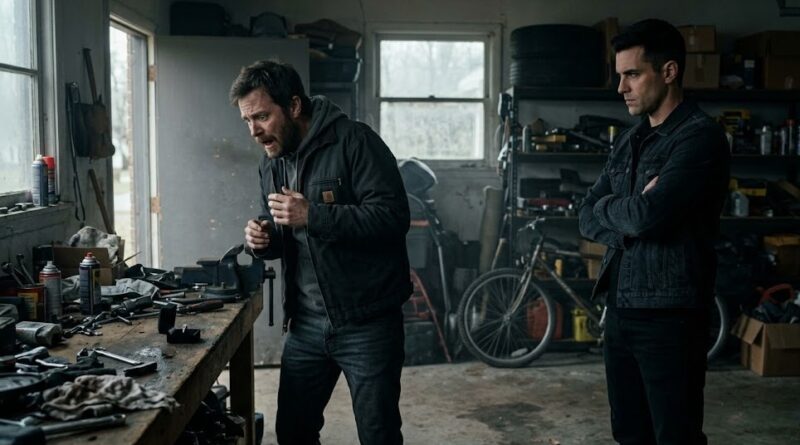
“You kept the receipts,” Daniel said. He had one up against the window, tilting it at the grey light coming through the dirty glass, trying to make the faded numbers hold still long enough to read.
Caleb stood by the roll-up door with his arms crossed. He didn’t say anything. He watched his brother’s hands move over the bench, which was a mess, wrenches everywhere, a vise half taken apart, a pile of rags gone stiff with oil. A bike leaned against the metal shelving. Tires stacked in the corner under a film of dust. The place smelled like cold concrete and old grease, like somebody had stopped sweeping it a long time ago and never started again.
“I don’t know what you think you’ve got,” Caleb said finally.
Daniel made a noise that wanted to be a laugh and wasn’t. “Took me three weeks. But it’s right here.”
Four Months Back
To understand why Daniel was standing in that garage with his hands shaking you have to go back to the morning their father died.
Henry Mercer was seventy-one. He’d built custom furniture out of the shop behind the house for almost forty years, and when his heart quit on a Tuesday he left two sons, a paid-off property, and a will that should have been simple.
It wasn’t. Caleb was the older one. He’d been living with the old man the last two years, had quit his job in another state and come back saying he wanted to help with the business and with Henry’s health, which was going. Everybody thought that was a good thing to do. Daniel thought so. He lived four hours off, had a wife and two kids and a mortgage, a life that didn’t stop on command, and he’d been glad Caleb was there to handle the day-to-day so he didn’t have to.
When the lawyer read the will, the house and the land went to Caleb. The shop too, and everything in it. Daniel got what the lawyer called a cash consideration, which came to eleven thousand dollars. The shop alone was worth close to half a million with the inventory and the acreage under it.
He didn’t fight it. Grief slows you down, and he figured the old man had his reasons. Maybe Caleb had earned it being there. Maybe Daniel had gotten written down for living so far away. It stung. He could live with stinging.
Timeline
What he couldn’t live with came up about a month after the funeral. He was digging through old emails for a photo his father had sent him once, and instead he found a message from Henry from six weeks before he died. In it the old man said, like it was nothing, that he was thinking of splitting the property down the middle, the way their mother would have wanted. He’d written it the way people write things they think they have years to deal with.
The will said something else. And it had been signed eleven days before Henry died.
Daniel started asking around. Quiet at first. He called the lawyer who’d drawn it up, a man named Pruitt none of them had ever used. Pruitt was slippery. Said the will was good, said Henry had come in alone and clear-headed. But when Daniel asked to see the original with the signature on it, there were delays. Excuses. A sudden fog about where exactly the file had gotten to.
So Daniel started driving up on weekends. He told Caleb he wanted to spend time at the place, feel close to Dad. Caleb let him in, a little stiff about it. And when Caleb went out for errands Daniel went through the house.
He found the first piece in the old man’s desk, a checkbook register with a payment to Pruitt’s office for an amount way too big for a simple will change. He found the second in the garage, in a folder Caleb had meant to get rid of and hadn’t. Inside were notes in Caleb’s own writing, drafts of language, lines that turned up almost word for word in the will.
Ring
Their mother’s ring had a diamond in it. She’d died when both boys were small. The ring was the one thing in the family nobody argued about, not because of what it was worth, which was something but not much, but because it had been hers. Henry had kept it in a box on his dresser twenty years and always said it’d go to whichever boy married first, or get split in spirit if they both did.
When Daniel asked about it after the funeral, Caleb said it was gone. “Dad must’ve sold it. Money was tighter than we knew.”
That was the one that did it, because Daniel knew his father. The man would have sold the house before that ring. He’d have eaten dry toast a year before he let it go.
So on his last visit, with Caleb at the hardware store, Daniel went through the garage one more time, top to bottom. He found a manila envelope taped under a shelf, back behind the stacked tires. Inside was the ring in a scrap of cloth, the receipts from Pruitt, and a ledger in Caleb’s hand laying out exactly how he’d put the whole thing together.
Which is how Daniel came to be standing at the workbench with his hands going, and his brother by the door with no more room to lie.
What Got Said
“Dad wanted to split it.” Daniel’s voice broke on it. He pushed his fist against his chest like he could keep himself in one piece that way. “He wrote me. Six weeks before. And you got to him. You found that lawyer and you put the words in his mouth—”
“You don’t know what those two years were.” Caleb’s arms stayed crossed but something pulled tight in his voice. “You weren’t here. You called twice a month and felt good about it. I cleaned him up. I drove him to dialysis at five in the morning. I earned that house.”
“You stole it.” Daniel’s eyes were wet, his face red and starting to come apart. “And you told me Mom’s ring was gone. You stood there at his funeral and told me to my face it was gone.”
Caleb didn’t say anything for a second. The arms held, the jaw held, but behind his eyes something had gone flat and cold, the look a man gets when he’s decided to quit pretending.
“It’s mine now,” Caleb said. “All of it. And there’s nothing in your hand a judge is going to care about.”
That was when Daniel got it, that his brother wasn’t sorry. Not a little. The grief he’d been hauling around four months had been built around a Caleb who didn’t exist, the one who was just there, just helping, just a son doing right by the old man. That had been a costume. The man inside it had been running the numbers on the house while their father was still breathing.
What He Did About It
He didn’t throw anything. He didn’t go across the room, though for one bad second he wanted to. He set the receipts down on the bench, slid the ring into his jacket pocket, and looked at his brother for what he already knew was the last time.
“I made copies,” he said. “All of it. Pruitt’s getting a call from the bar. The estate’s going back to probate whether you fight it or not. You should’ve burned this stuff.”
He hadn’t made copies yet. That part wasn’t true. But it was true by the next morning, because he drove straight back to his own city and put the originals on a lawyer’s desk and let the law start grinding.
It took most of a year. Pruitt gave up his license rather than face a fraud charge and testified about the pressure Caleb had put on him to backdate and rewrite. The will got thrown out. The estate came apart and went back together the way Henry had actually meant it to, even down the middle.
Caleb got half.
Daniel never worked out why that didn’t land like a win. Maybe because half a house isn’t worth a brother and he’d handed one over for the other without anybody asking him if he wanted to.
He kept the ring. He had it cleaned and the diamond came back bright and small and ordinary, a hard little thing that had outlasted everybody who ever loved it. He gave it to his daughter when she turned eighteen and told her it had been her grandmother’s, that it had been lost a while and then turned up. He didn’t get into the rest of it.
A few weeks after the case closed, his daughter asked him over dinner why he and Uncle Caleb didn’t talk anymore. Daniel moved the rice around on his plate with his fork. He said it was complicated, that grown-ups fell out sometimes, and then he asked her if she’d done the financial-aid forms yet, because the deadline was the end of the month and he didn’t want her leaving it to the last week.
