Weeds That Didn’t Need Pulling
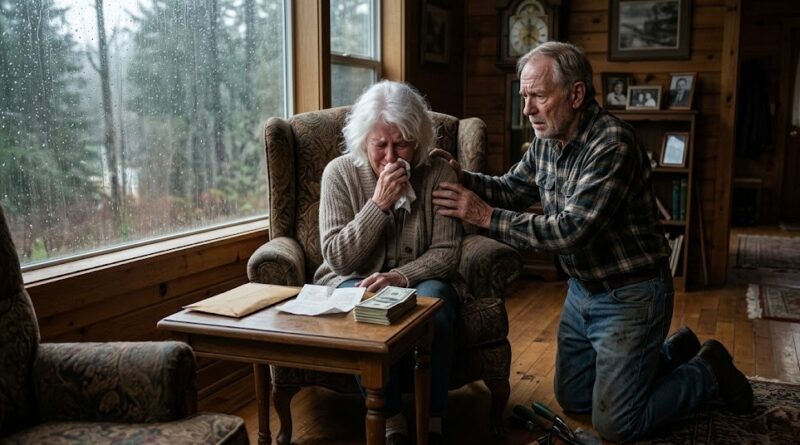
Rain had been working at the house since noon, finding the gaps in the old window frames, pooling on the sill where the paint had gone soft years ago. Margaret kept the radio off. A clock in the corner moved through its rounds, the brass pendulum catching what little light came through the gray.
She heard herself before she understood she was making the sound. A wet, broken thing, starting low in her throat.
Thirty years she’d sat in this chair. Her hand knew the worn patch on the armrest the way it knew the shape of her own knuckles, and her hand was there now, gripping. Hair had slipped loose from the pin at the back of her head. An envelope lay open across her lap, brown, soft-cornered from handling, and three sheets of paper shook between her fingers because her fingers would not hold still.
She let it come. Crying was just a thing the body did, like sneezing or bleeding, and there was no use standing in its way. Guilt and grief showed up together, and underneath them something worse, something that felt like wanting, and she had spent a long time keeping that particular feeling locked in a drawer.
Boots scraped the mat. Thomas came through the door dragging the smell of wet dirt behind him, water running off his jacket, two muddy prints left where he stood. He’d been out back since after lunch pulling weeds that didn’t need pulling, the way a man works when the work is just an excuse to be somewhere his wife isn’t talking to him.
He looked at her and went still. A trowel and a hand fork dropped from his grip and hit the floorboards, the clatter of it filling the whole room.
Thirty Years of Not Saying It
They had a thing they didn’t talk about. One subject, sealed off, untouched even on the bad nights when they both lay awake staring at the same dark ceiling for the same reason. Looking at her face now, Thomas knew the seal was gone. Whatever it was, it was already in the room with them.
He came across the floor and got down on his knees in front of the chair, his hands finding her shoulders.
“Maggie. Hey. Look at me. What is it.” His voice cracked on the last word. “You’re scaring me here.”
She shook her head. Nothing came. He waited, his pulse going hard in his neck, his mind already laying out every bad thing it could reach for. She raised the letter an inch off her lap, slow, like the paper had weight it shouldn’t have.
“Thomas. It’s him.” Her breath caught. “It’s our boy. He found us.”
Neither of them moved. The clock kept on. Something dropped in Thomas’s gut, and he knew the feeling, had carried it since he was twenty-six and broke and standing in a hallway that smelled of bleach, holding a baby for the last time.
What They’d Done
No money back then. Some weeks no food worth the name. And a son who deserved more than two kids could scrape together. So they’d wrapped him up and carried him to the children’s home off Mercer Street, put their names where a woman behind a desk pointed, and walked out into the cold with their arms empty. They called it love when they could stand to call it anything. Most nights it just felt like leaving.
“What’s he say?” Thomas got the words out. He was braced for it. He figured anger was coming, and he figured he’d earned it.
What the Letter Said
Margaret dragged the back of her hand across her face and worked to get her voice under her.
He wrote that he knew them. He’d spent years at it, he said, running down records and dead ends before an address finally turned up. He understood about the money, he wrote. He understood the choice, how little choice there’d been in it. No anger came off the page, no blame. But he set it down plain, no softening: he wasn’t ready to see them. He didn’t know what that would do to him, whether it would land easy or strange or somewhere he couldn’t name, and he needed time before he went looking for the answer.
Thomas let his breath go, all of it, like he’d been holding the same lungful for thirty years. The boy was alive. The boy didn’t hate them. That was already more than he’d let himself want in a long while.
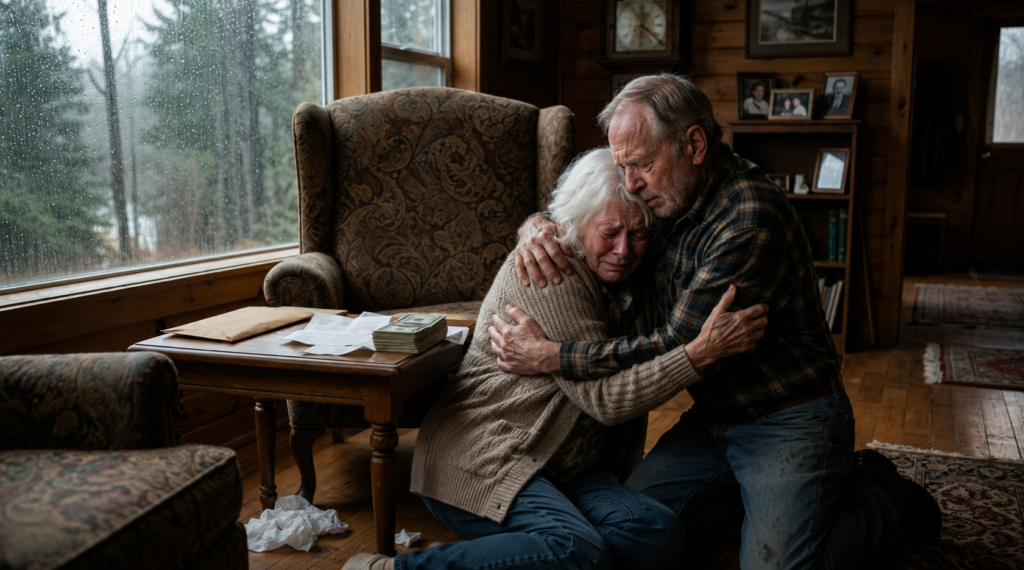
Margaret reached into the envelope again and came out with a fold of bills, more cash than either of them had held at one time, maybe ever. A small note slipped loose and seesawed down to the floor. Thomas picked it up while she read on.
The boy wanted them comfortable. Wanted them to quit lying awake over money for whatever was left. He was clear it wasn’t a debt getting paid. Nobody owed anybody, he wrote. He just wanted to do it. And someday, he wrote, he hoped the three of them would sit in a room together.
After
Thomas came apart then. He pulled her into him off the chair, half onto the floor with him, and they held on and shook, the both of them, the way people do when thirty years of swallowed-down grief comes due all at once and demands paying in a single afternoon.
The rain didn’t let up. It went on hitting the glass at the same patient pace, indifferent to the two old people on the floor of the front room.
The money sat on the side table where Thomas had set it. Neither of them was looking at it. He got himself up first, knees popping, and put a hand down for her. She took it. He found the box of tissues on the shelf and brought it over, and she pulled two and pressed them under her eyes, and he blew his nose, loud, an ugly honking sound, and she let out a short laugh that wasn’t really a laugh.
“You’re a mess,” she said.
“Yeah.” He sat down on the arm of the chair. The cushion he never let himself take, the one that had been only ever hers. He stayed there anyway. Outside a car went by slow through the standing water, tires hissing, headlights sliding once across the ceiling and gone.
“I should put the kettle on,” she said, and didn’t move.
