
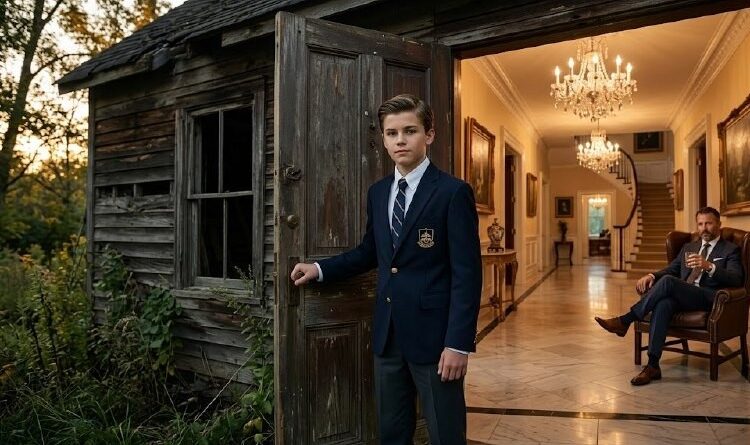
Beyond the Splintered Door: The Illusion of Power
The late afternoon sun cast long, golden shadows across the cracked asphalt. Exhaust fumes still lingered in the crisp air as the yellow school bus rattled away down the country road. Through the dusty back windows, the faces of teenage heirs and trust-fund kids twisted with cruel laughter. Their mocking words hung in the quiet breeze, sharp enough to wound.
Yet the boy in the navy blazer did not flinch.
He stood alone before the decaying, overgrown wooden shack, letting the natural silence of the fading day replace the roar of the engine. He adjusted his tie, his lips curving into a calm, untroubled smile. He felt no humiliation; only a quiet sense of superiority. His classmates understood only the world they had been allowed to see. With a gentle wave to the disappearing bus, he turned toward the ruin.
With a deliberate step, he pushed against the shack’s heavy, splintered door.
In a single heartbeat, the atmosphere violently shifted. The smell of dry rot and rusted metal vanished, instantly swallowed by the rich, intoxicating scent of polished mahogany, fresh lilies, and aged leather. The heavy door clicked shut behind him, completely sealing away the illusion.
A breathtaking sanctuary of absolute wealth lay before him. Crystal chandeliers cast warm, fractured light across sweeping marble floors. Classical oil paintings gazed down from the soaring, immaculate walls. It was a temple of quiet, yet screaming luxury. He walked through the grand hallway, the soft echo of his footsteps was the only sound throughout the vast estate.
He found him in the study.
His father sat in a massive leather wingback chair, the very picture of relentless dominance. The older man gently swirled amber whiskey in a heavy crystal tumbler, the ice clinking softly in the silent room. He didn’t look like a man who hid; he looked like a man who waited.
“Dad,” said the boy, his voice smooth and free of any childish insecurity. “They’re still making fun of our shack.”
The father stopped swirling his drink. Slowly, he raised his head, his eyes sharp, cold, and calculating. A faint smirk spread across his face—the unapologetic expression of a man who controlled not just the room, but the very game they were playing.
“Invite them,” replied the father, his voice a deep, commanding rumble.
It wasn’t a suggestion. It was checkmate. The boy smiled back, the shared secret passing between them in the quiet room. True power didn’t need a lavish driveway or a golden gate to prove its worth. True power built a trap of rotten wood, opened the door, and simply waited for the fools to walk inside.